
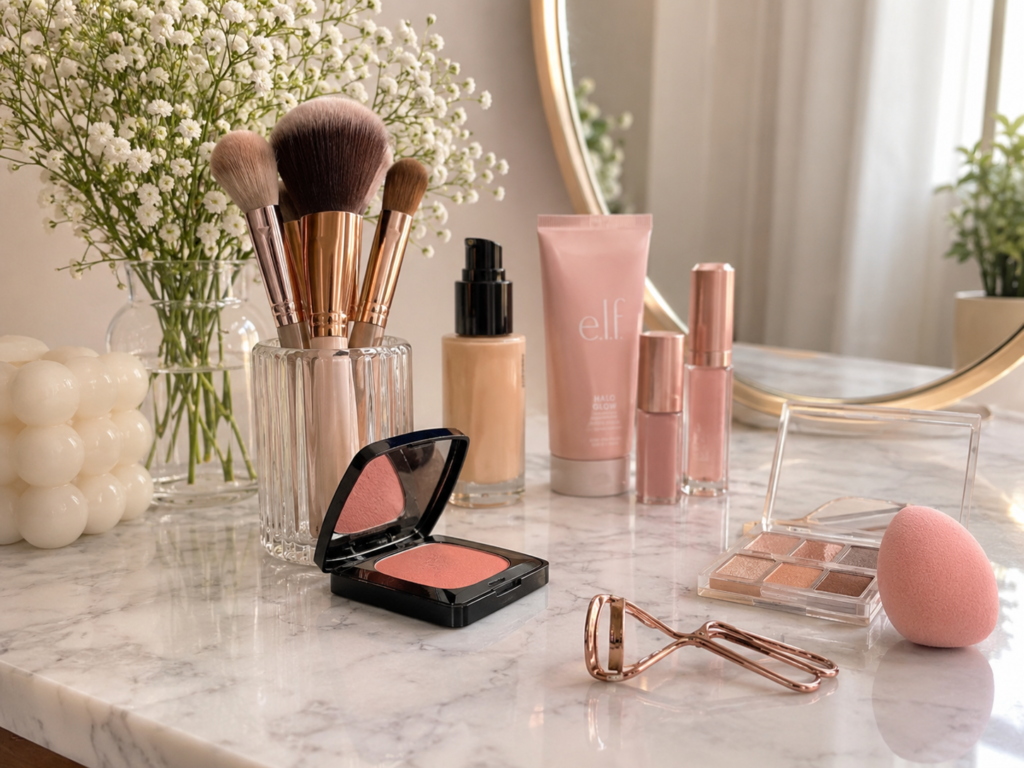
Makeup is more than just applying foundation, lipstick or mascara. It is a simple way to express your personality, highlight your favourite features and feel confident in your everyday appearance. Whether you are getting ready for college, going to work, meeting friends or enjoying a casual day out, a little makeup can help you feel fresh and put together.
However, creating a beautiful everyday makeup look does not require a large collection of expensive products or complicated techniques. In fact, a natural makeup routine often looks best when it is simple, comfortable and suited to your personal style.
If you are a beginner, you might feel confused about which products to use, what order to apply them in or how much makeup is enough for daily wear. The good news is that you do not need to master every makeup technique to create a polished look.
In this guide, we will explore an easy everyday makeup routine, from preparing your skin to choosing the right base, adding a touch of colour and finishing with a natural lip look. These steps will help you create a fresh appearance without spending too much time in front of the mirror.
1. Understand Your Everyday Makeup Style
Before choosing makeup products, it is important to understand what kind of look you want to create. Everyday makeup is generally lighter and more comfortable than party or special-occasion makeup.
The purpose is not to completely change your appearance but to enhance your natural features. A little concealer, a touch of blush, defined lashes and a comfortable lip colour can make a noticeable difference.
Your everyday makeup style may depend on your lifestyle, personal preferences and the amount of time you have in the morning.
For example, someone going to college might prefer a lightweight base, mascara and lip tint, while someone working in an office may enjoy a slightly more polished look with subtle eyeliner and a neutral lipstick.
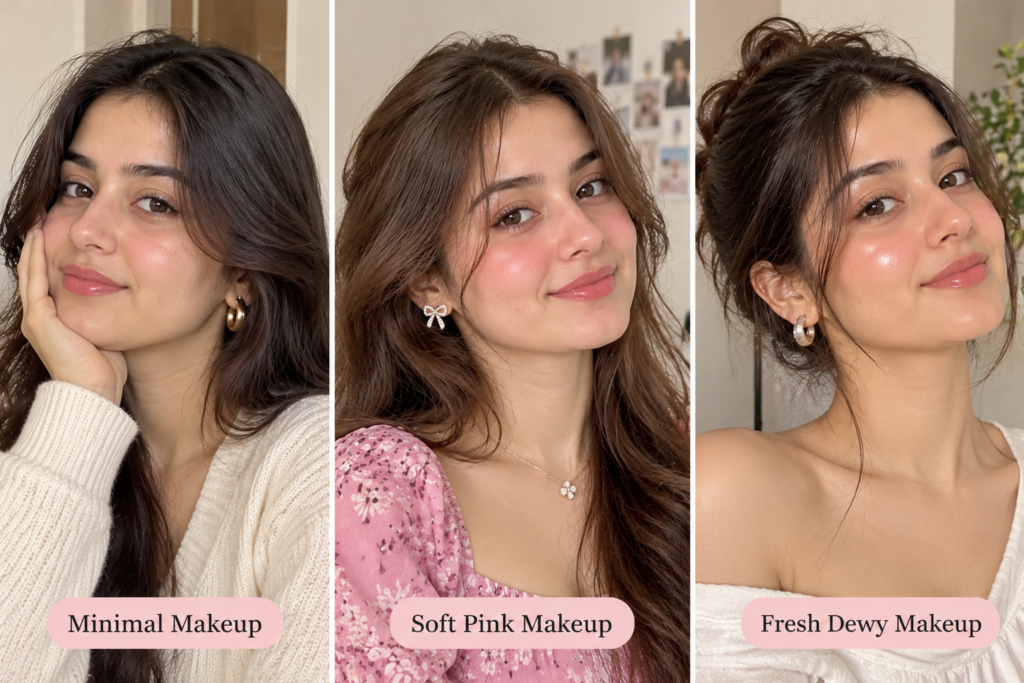
Popular Everyday Makeup Looks
| Makeup style | Main features | Best for |
|---|---|---|
| No-makeup makeup | Lightweight base, natural brows and nude lips | Daily activities |
| Soft pink makeup | Pink blush, soft eyes and rosy lips | Casual outings |
| Minimal makeup | Concealer, mascara and lip balm | College and everyday wear |
| Soft brown makeup | Neutral eyeshadow and brown eyeliner | Office and daytime events |
| Fresh dewy makeup | Hydrated-looking skin and cream blush | Daytime occasions |
The best everyday makeup style is one that makes you feel comfortable and confident. You do not have to follow every beauty trend to look stylish.
2. Prepare Your Skin Before Applying Makeup
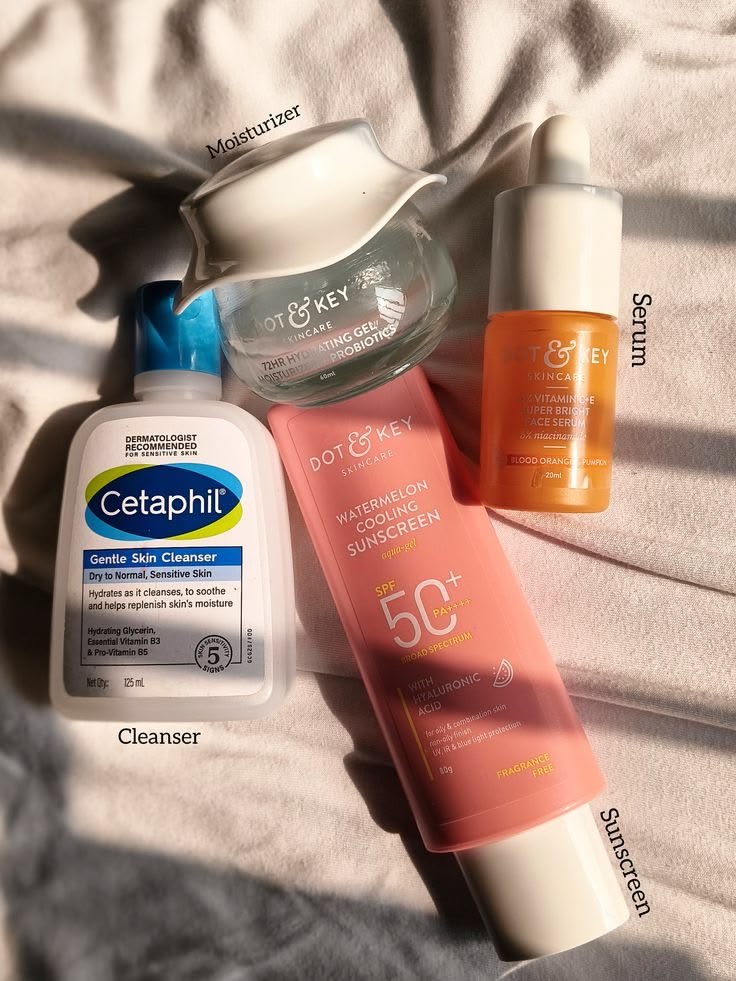
One of the most important steps in any makeup routine is preparing your skin. Even beautifully applied foundation may not look smooth if your skin feels dry, oily or uncomfortable underneath.
Good skin preparation helps makeup apply more evenly and can make your overall look appear fresher. You do not need ten different skincare products to prepare your face. A simple routine is usually enough.
To build a simple beauty routine, explore our guide to Everyday Style: Fashion, Beauty & Self-Care
Step 1: Cleanse Your Face
Start with a gentle cleanser that suits your skin type. Cleansing helps remove excess oil, sweat and impurities that may have collected on your skin.
Avoid using harsh cleansers or scrubbing your face aggressively. The aim is to leave your skin feeling clean and comfortable, not tight or excessively dry.
Step 2: Apply Moisturizer
After cleansing, apply a suitable moisturizer.
Moisturizer helps maintain skin hydration and creates a comfortable base for makeup. Choose a lightweight formula if you prefer a less heavy feeling, or a richer moisturizer if your skin tends to feel dry.
Allow your skincare products to settle before applying makeup.
Step 3: Never Skip Sunscreen During the Day
If you are getting ready during daylight hours, sunscreen should be part of your skincare routine.
Choose a broad-spectrum sunscreen with SPF 30 or higher and follow its application directions. Apply it as the final step of your skincare routine before makeup.
Remember that makeup products with SPF should not automatically replace your regular sunscreen.
Step 4: Use Primer If Needed
Primer is an optional step. It can help create a smoother-looking surface for makeup and may help your base last longer.
Different primers are designed for different purposes:
- Hydrating primers can suit skin that feels dry.
- Mattifying primers can help reduce the appearance of shine.
- Blurring primers can soften the appearance of visible pores.
- Illuminating primers can add a subtle glow.
You do not need to use primer every day. If your moisturizer and sunscreen already provide a comfortable base, you can move directly to makeup.
3. Create an Even Base with Foundation or BB Cream
After preparing your skin, the next step is creating an even-looking complexion.
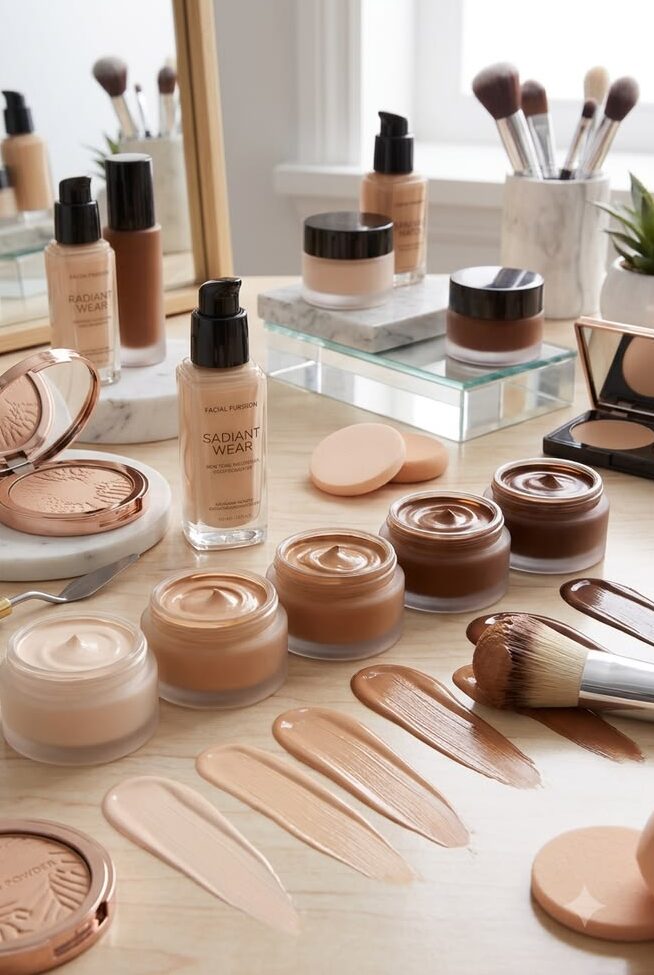
Foundation is one of the most popular makeup products, but it is not essential for every everyday look. Some people prefer a lightweight BB cream, tinted moisturizer or simply a little concealer.
The important thing is to choose a base product that feels comfortable and matches your skin tone.
Foundation vs BB Cream vs Tinted Moisturizer
| Product | Coverage | Suitable for |
|---|---|---|
| Foundation | Light to full, depending on formula | A more polished base |
| BB cream | Usually light to medium | Everyday natural makeup |
| Tinted moisturizer | Usually light | A lightweight, comfortable look |
| Concealer | Targeted coverage | Covering specific areas |
How to Apply Foundation Naturally
- Start with a small amount of foundation.
- Apply it to the centre of your face first.
- Blend gently towards the outer areas.
- Use a damp makeup sponge or suitable foundation brush.
- Add another thin layer only where extra coverage is needed.
Avoid applying too much foundation at once. A heavy base can sometimes make makeup look less natural, especially during the daytime.
How to Choose the Right Foundation Shade
Choosing the correct shade is just as important as choosing the right formula.
Here are a few useful tips:
- Test the shade along your jawline rather than relying only on your hand.
- Check how the shade looks in natural lighting.
- Consider your undertone when selecting a foundation.
- Make sure the formula feels comfortable on your skin.
- Avoid choosing a shade simply because it looks lighter or brighter.
A well-matched foundation should blend naturally with your complexion.
4. Use Concealer to Cover and Brighten
Concealer is a useful product for creating a more even-looking makeup base. It provides additional coverage in specific areas without requiring another layer of foundation over the entire face.
You can use concealer to cover the appearance of dark circles, redness, blemishes and uneven-looking areas.
Where Should You Apply Concealer?
Common areas include:
- Under the eyes to brighten the appearance of tired-looking skin.
- Around the nose where redness may be visible.
- On individual blemishes that need extra coverage.
- Around the mouth if you want a more even-looking finish.
- On small areas where your foundation has not provided enough coverage.
Tips for Applying Concealer
First, choose a concealer that suits the purpose. A shade close to your foundation can help cover blemishes, while a slightly lighter shade can brighten the under-eye area.
Apply a small amount and blend it gently using your ring finger, brush or makeup sponge.
Remember that more concealer does not always mean better coverage. Start with a little product and build it gradually.
If you have dry under-eyes, make sure the area is comfortably moisturized before applying concealer.
5. Add a Natural Flush with Blush and Bronzer
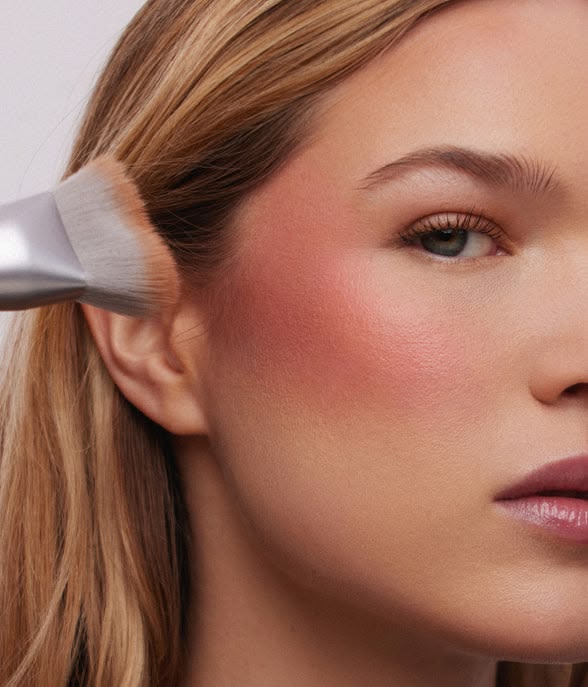
Blush is one of the easiest ways to make everyday makeup look fresh and lively. A little colour on the cheeks can add warmth and bring balance to your overall appearance.
For everyday makeup, soft pink, peach, rose and muted coral shades are popular choices.
How to Choose the Right Blush
| Blush shade | Overall effect |
|---|---|
| Soft pink | Fresh and delicate |
| Peach | Warm and natural |
| Rose | Soft and elegant |
| Coral | Bright and lively |
| Mauve | Muted and sophisticated |
Choose a shade that complements your complexion and the overall look you want to create.
Cream Blush vs Powder Blush
Cream blush is often loved for its skin-like finish and easy blending. Powder blush can be useful if you prefer a more matte finish or want a product that layers easily over a powdered base.
You can choose either depending on your preference.
How to Apply Blush
- Smile gently to identify the cheek area.
- Apply a small amount of blush.
- Blend it towards the upper cheek area.
- Avoid applying too much product in one spot.
- Check both sides of your face for balance.
Should You Use Bronzer Every Day?
Bronzer is optional. It can add warmth and a softly sun-kissed appearance to your makeup.
Apply a small amount around the outer forehead, temples and cheek area, blending carefully. Choose a shade that looks natural rather than overly dark or orange.
For a simple everyday look, blush alone may be enough.
6. Create Simple Eye Makeup for Everyday Wear
Eye makeup can make your entire appearance look more defined, but everyday eye makeup does not need to be complicated.
You can create a beautiful look using only two or three products. The idea is to enhance your eyes without making the makeup feel too heavy.
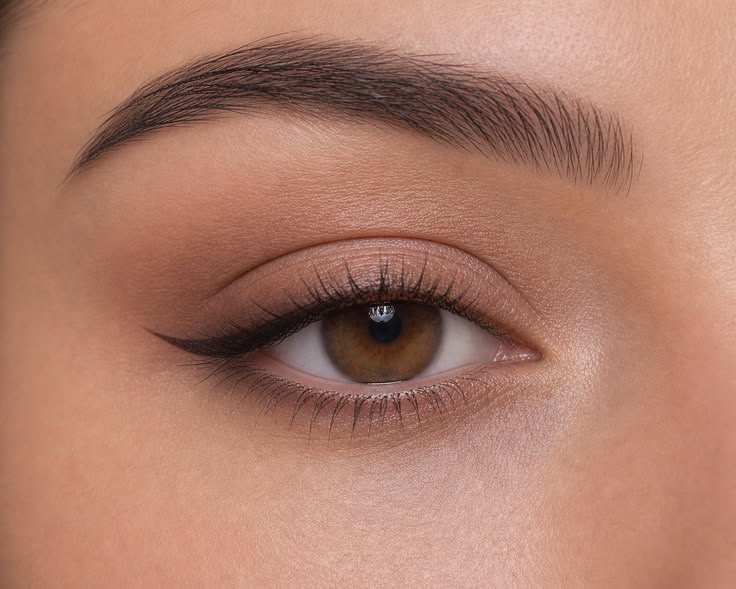
Step 1: Apply Neutral Eyeshadow
Neutral eyeshadow shades are easy to wear and work well with different outfits.
Some popular everyday colours include:
- Beige
- Soft brown
- Taupe
- Light peach
- Champagne
- Muted rose
Apply a light shade across your eyelids and blend a slightly deeper shade into the crease if you want more definition.
You can also skip eyeshadow entirely for an extremely minimal look.
Step 2: Add Eyeliner
Eyeliner helps define the eyes. For everyday makeup, you can choose brown or black eyeliner depending on your preference.
A thin line close to the upper lash line is usually enough. If you enjoy a softer appearance, brown eyeliner can be a lovely alternative to black.
You do not need to create a dramatic wing for everyday wear.
Step 3: Apply Mascara
Mascara adds definition to your lashes and helps make your eyes appear more awake.
Before applying mascara, make sure your lashes are clean and dry.
Apply one light coat from the base towards the tips. If you want additional definition, allow the first coat to settle before applying another.
Avoid applying too many layers, as this can create clumps.
Step 4: Groom Your Eyebrows
Eyebrows help frame your face, so keeping them neat can complete your makeup look.
Use a clean spoolie brush to gently comb your brows into place. If needed, fill sparse areas with a brow pencil or powder using light, hair-like strokes.
Avoid drawing very dark or overly sharp eyebrows if you want a natural finish.
7. Choose the Right Lipstick or Lip Tint
Lip colour is the finishing touch that can bring your entire everyday makeup look together.
You do not need bold or dramatic lipstick for daily wear. Soft nude, pink, peach, mauve and rose shades can complement natural makeup beautifully.
Popular Lip Colours for Everyday Makeup
| Lip colour | Makeup style |
|---|---|
| Nude pink | Soft and minimal |
| Peach nude | Fresh and warm |
| Rose pink | Feminine and elegant |
| Mauve | Subtle and sophisticated |
| Brown nude | Neutral and polished |
| Soft coral | Bright and lively |
Just as choosing the right lip colour matters, selecting shades that complement your overall look is important. Read our guide to choosing colours for different occasions for more inspiration
Lipstick, Lip Tint or Lip Gloss?
Each product creates a slightly different finish.
Lipstick: Suitable when you want more visible colour and a defined lip look.
Lip tint: A good option if you prefer a lightweight wash of colour.
Lip gloss: Adds shine and can create a fresh, glossy appearance.
Tinted lip balm: Useful when you want a little colour with a comfortable, simple finish.
Tips for a Beautiful Everyday Lip Look
- Choose shades that complement your overall makeup.
- Apply lip balm if your lips feel dry.
- Avoid applying too much product at once.
- Use a lip liner if you prefer more definition.
- Blot excess lipstick gently for a softer finish.
For a quick everyday look, a rosy lip tint or nude lipstick can be enough.

8. Set Your Makeup for a Longer-Lasting Finish
Once your makeup is complete, you may want to help it stay in place throughout the day.
Setting products are optional, but they can be useful depending on your skin type, weather and makeup preferences.
Setting Powder
Setting powder helps reduce excess shine and can set certain areas of your makeup.
You can apply a small amount to:
- Under the eyes, if suitable for your skin.
- Around the sides of the nose.
- The forehead.
- The chin.
- Other areas that tend to become shiny.
Avoid applying too much powder, especially if you prefer a natural or dewy finish.
Setting Spray
Setting spray is another optional product. It is designed to help finish your makeup and may improve how it wears, depending on the formula.
Different types include:
- Dewy setting sprays.
- Matte setting sprays.
- Natural-finish setting sprays.
Choose a finish that matches your preference.
How to Make Everyday Makeup Look Fresh
A few simple habits can help:
- Use lightweight products when possible.
- Apply makeup in thin layers.
- Allow skincare products to settle before applying your base.
- Avoid touching your face frequently.
- Carry blotting paper if your skin becomes shiny.
- Keep your makeup tools clean.
Remember that no setting product can guarantee that makeup will remain perfect throughout the day. Your skin type, environment and the products you use all make a difference.
9. Everyday Makeup Routine According to Your Skin Type
Not every makeup product works the same way for everyone. Your skin type and personal comfort should influence the products you choose.
For Oily Skin
If your skin becomes shiny during the day, lightweight and oil-free products may feel more comfortable.
You can consider:
- Lightweight base products.
- Oil-free or non-comedogenic makeup.
- Powder blush if you prefer a less shiny finish.
- A small amount of setting powder.
- Blotting papers for occasional touch-ups.
Avoid repeatedly adding powder throughout the day without checking whether your skin actually needs it.
For Dry Skin
If your skin feels dry or tight, focus on comfortable skin preparation.
You can consider:
- A suitable moisturizer.
- Hydrating base products.
- Cream blush.
- Lightweight concealer.
- A natural or dewy finish.
Avoid applying excessive powder to areas that already feel dry.
For Combination Skin
Combination skin may have both oily and dry areas.
You can use different product textures depending on what feels comfortable in each area. For example, use a little setting powder around the forehead and nose while keeping the cheeks more natural.
For Sensitive or Acne-Prone Skin
If your skin is sensitive or prone to breakouts, choose makeup carefully.
Look for products labelled non-comedogenic or won’t clog pores, especially if you are concerned about clogged pores.
For more dermatologist-recommended advice, read the American Academy of Dermatology’s guide to choosing makeup for acne-prone skin
Patch testing new products can help you identify potential irritation. Avoid sharing makeup, brushes and applicators, and remove makeup before sleeping.
If a product repeatedly causes irritation or breakouts, stop using it and consider seeking advice from a dermatologist.
10. A Quick 10-Minute Everyday Makeup Routine
Some mornings are busy, and you may not have enough time for a complete makeup routine. The good news is that you can create a fresh everyday look in approximately ten minutes.
Here is a simple routine you can follow.
| Time | Makeup step | Product |
|---|---|---|
| 1 minute | Prepare your skin | Moisturizer and sunscreen |
| 2 minutes | Create a light base | BB cream or foundation |
| 1 minute | Cover specific areas | Concealer |
| 1 minute | Add colour | Blush |
| 2 minutes | Define your eyes | Mascara and optional eyeliner |
| 1 minute | Groom your brows | Brow pencil or spoolie |
| 1 minute | Finish your lips | Lip tint or lipstick |
| 1 minute | Final touch | Optional setting powder or spray |
The timings are flexible. You can skip any step that you do not need.
The secret to a quick routine is keeping your products organized and choosing a few reliable essentials rather than trying to use everything in your makeup collection.
Just as a simple makeup routine saves time, having versatile clothing pieces makes everyday styling easier. Explore our guide to Wardrobe Essentials Every Woman Needs
11. Common Everyday Makeup Mistakes to Avoid
Even simple makeup can become difficult when you use too many products or apply them incorrectly. Avoiding a few common mistakes can help you achieve a more balanced and natural finish.
1. Applying Too Much Foundation
A thick layer of foundation may make your makeup appear heavy. Start with a small amount and build coverage only where necessary.
2. Choosing the Wrong Foundation Shade
A foundation that is too light or too dark can create an uneven appearance. Always check the shade in natural lighting before purchasing.
3. Skipping Skin Preparation
Applying makeup over uncomfortable or unprepared skin can affect how smoothly your products blend. Follow a simple skincare routine before starting.
4. Using Too Much Concealer
Concealer is meant to provide targeted coverage. Applying too much can make certain areas look heavy or textured.
5. Overdoing Blush and Bronzer
Blush and bronzer should complement your makeup rather than overpower it. Use small amounts and blend carefully.
6. Ignoring Eyebrow Shape
Very dark or sharply drawn brows can sometimes look out of place with otherwise minimal makeup. Use light strokes for a softer result.
7. Sleeping with Makeup On
Leaving makeup on overnight is a habit worth avoiding. Remove your makeup gently before going to bed and follow your regular nighttime skincare routine.
8. Using Dirty Makeup Brushes
Makeup tools collect product residue, oil and dirt. Clean them regularly and allow them to dry properly before using them again.
9. Sharing Makeup Products
Avoid sharing products and applicators that come into direct contact with your skin or eyes. This helps reduce the risk of spreading unwanted germs.
10. Following Every Makeup Trend
Not every beauty trend will suit your preferences or feel comfortable on your skin. Experiment with trends, but keep the techniques and products that genuinely work for you.
12. Essential Makeup Products for Beginners
If you are new to makeup, building a collection can feel overwhelming. There are countless products available, and social media often makes it seem as though you need everything.
However, a small collection of versatile products is enough to create several everyday looks.
Here is a beginner-friendly list:
| Product | Purpose | Essential or optional |
|---|---|---|
| Moisturizer | Prepares and hydrates skin | Essential skincare step |
| Sunscreen | Helps protect skin from UV exposure | Essential during daytime |
| BB cream or foundation | Creates an even-looking base | Optional |
| Concealer | Provides targeted coverage | Optional |
| Blush | Adds colour to cheeks | Optional |
| Eyebrow pencil | Defines eyebrows | Optional |
| Mascara | Defines lashes | Optional |
| Eyeliner | Adds eye definition | Optional |
| Lipstick or lip tint | Adds colour to lips | Optional |
| Setting powder | Helps reduce shine | Optional |
| Setting spray | Finishes makeup | Optional |
You do not need to purchase all these products at once. Start with a few essentials and gradually add products as you understand your preferences.
13. How to Make Your Everyday Makeup Look More Natural
A natural makeup look is not about using the fewest products possible. It is about choosing products and techniques that work together without making your makeup feel excessive.
Here are some simple ways to achieve a balanced appearance.
Choose lightweight formulas: Products that feel comfortable on your skin can make everyday makeup easier to wear.
Blend everything properly: Visible lines between foundation, concealer and blush can make your makeup look less seamless.
Use neutral colours: Soft pinks, peaches, beige and browns are versatile choices for everyday makeup.
Keep your eye makeup simple: A little mascara and subtle eyeliner can be enough to define your eyes.
Match your lip colour to your look: A nude or rosy shade can complement minimal makeup without overpowering it.
Work with your natural features: Instead of trying to change every part of your appearance, focus on the features you enjoy highlighting.
Most importantly, remember that natural makeup does not have to look identical on everyone. Your complexion, features and preferences are unique, and your makeup routine should reflect that.
14. Makeup Hygiene and Product Care
An everyday makeup routine should also include good product hygiene. Taking care of your makeup products and tools is important because they come into regular contact with your skin.
Here are a few habits to follow:
- Wash your makeup brushes regularly.
- Clean makeup sponges after use.
- Avoid sharing makeup products and applicators.
- Keep product lids tightly closed.
- Store makeup in a clean, dry place away from excessive heat.
- Check the period-after-opening symbol and product instructions.
- Discard products that change smell, colour or consistency.
- Never use eye makeup that appears damaged or has become unusually dry.
Old or contaminated makeup can cause irritation and other skin problems. Pay attention to the condition of your products instead of keeping them simply because they are not empty.
Conclusion: Keep Your Everyday Makeup Simple and Beautiful
Creating an everyday makeup routine does not have to be complicated. You do not need expensive products, professional techniques or hours of preparation to achieve a fresh and polished appearance.
Start with comfortable skin preparation, choose a base that suits your preferences, add a little colour to your cheeks, define your eyes and finish with a lip shade you love.
As you become more familiar with makeup, you can experiment with different textures, colours and techniques. Some days you may prefer a minimal look with only mascara and lip tint, while on other days you might enjoy adding blush, eyeliner and a little more coverage.
The most important thing is to find a routine that fits your lifestyle and makes you feel confident.
At StylePixel, we believe beauty is not about following every trend or achieving a perfect appearance. It is about discovering what makes you feel comfortable, expressing your personal style and enjoying the little details that make everyday life more beautiful.
Remember: You don’t need more makeup to look beautiful. Sometimes, a few simple touches are all you need to feel your best.